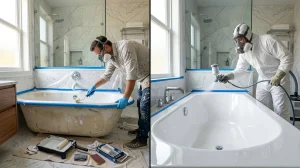
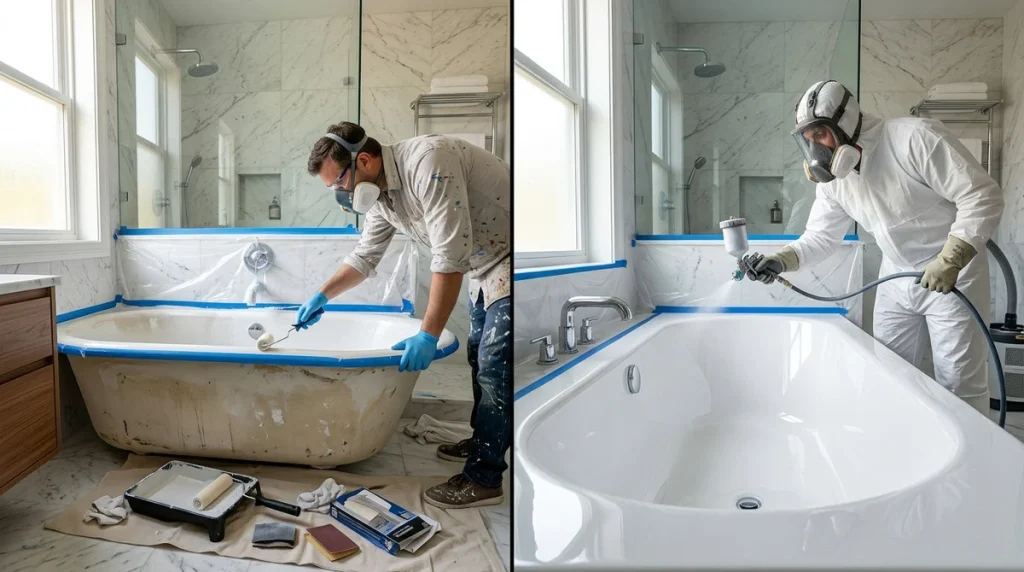
A tub can look rough without being ready for the dump. Maybe the finish has gone dull, stains keep coming back, or a few chips have appeared around the edges. Those problems can make replacement seem tempting. Yet Is bathtub refinishing a good idea? If the tub is still solid and the damage is mostly on its surface, giving it a new finish can be a reasonable alternative.
Start with what is actually wrong
Before making a decision, look past the color and shine.
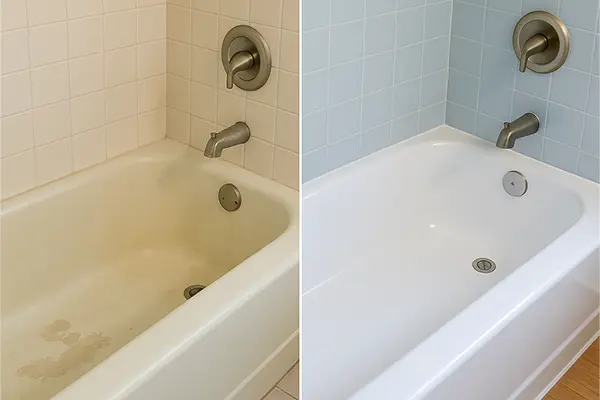
Surface damage and structural damage are not the same thing. Scratches, discoloration, minor chips, and stains are the sort of problems refinishing can address. A tub with deeper damage is a different story.
A few things deserve a closer look:
- Small chips and scratches on the surface
- Stains that do not come away with normal cleaning
- Rust that may have spread beyond a small area
- A tub that no longer feels sound or stable
None of these signs should be viewed in isolation. A small patch of wear is not the same as damage that has affected the fixture itself.
For a bathtub that is still in decent condition, Is bathtub refinishing a good idea may have a fairly simple answer when the main complaint is how the surface looks.
When replacement starts to make more sense
Some tubs have simply gone too far for refinishing to be the right fix.
Deep structural problems are a clear concern. So is extensive rust that has damaged the metal itself. Covering those problems with a fresh coating would only deal with what can be seen, not what caused the problem in the first place.
There is also the question of what happens during replacement. Taking out a bathtub can affect the surrounding area, particularly when plumbing or wall surfaces are involved. If the existing fixture is sound, creating that extra work may not make much sense.
Age alone is a poor reason to replace a tub.
Preparation matters more than the kit suggests
A refinishing kit can make the job look easier than it really is. Professional refinishing involves specialized equipment and commercial grade coatings. That can improve the finished result, but there is still a first step that should not be skipped. The tub needs to be suitable for refinishing in the first place.
Let the condition decide
Refinishing has a clear place when an otherwise sound bathtub has a tired or damaged surface. Replacement becomes more sensible when the fixture itself has serious problems that a new coating cannot fix.
That makes the decision less complicated than it first appears. A bathtub can look old and still have useful life left. Sometimes what needs replacing is not the tub at all. Just the surface.